Quick Answer
A forked fate line splits into two distinct branches rather than continuing as a single line, most often toward the top of the palm near the fingers. Traditionally it is read as more than one direction actively pursued — two careers, two roles, or a single path that develops a genuine second dimension — rather than as confusion about direction.
Forked Fate Line: What a Branching Path Means
Last reviewed: 2026-08-22 by ReadMyPalms editorial
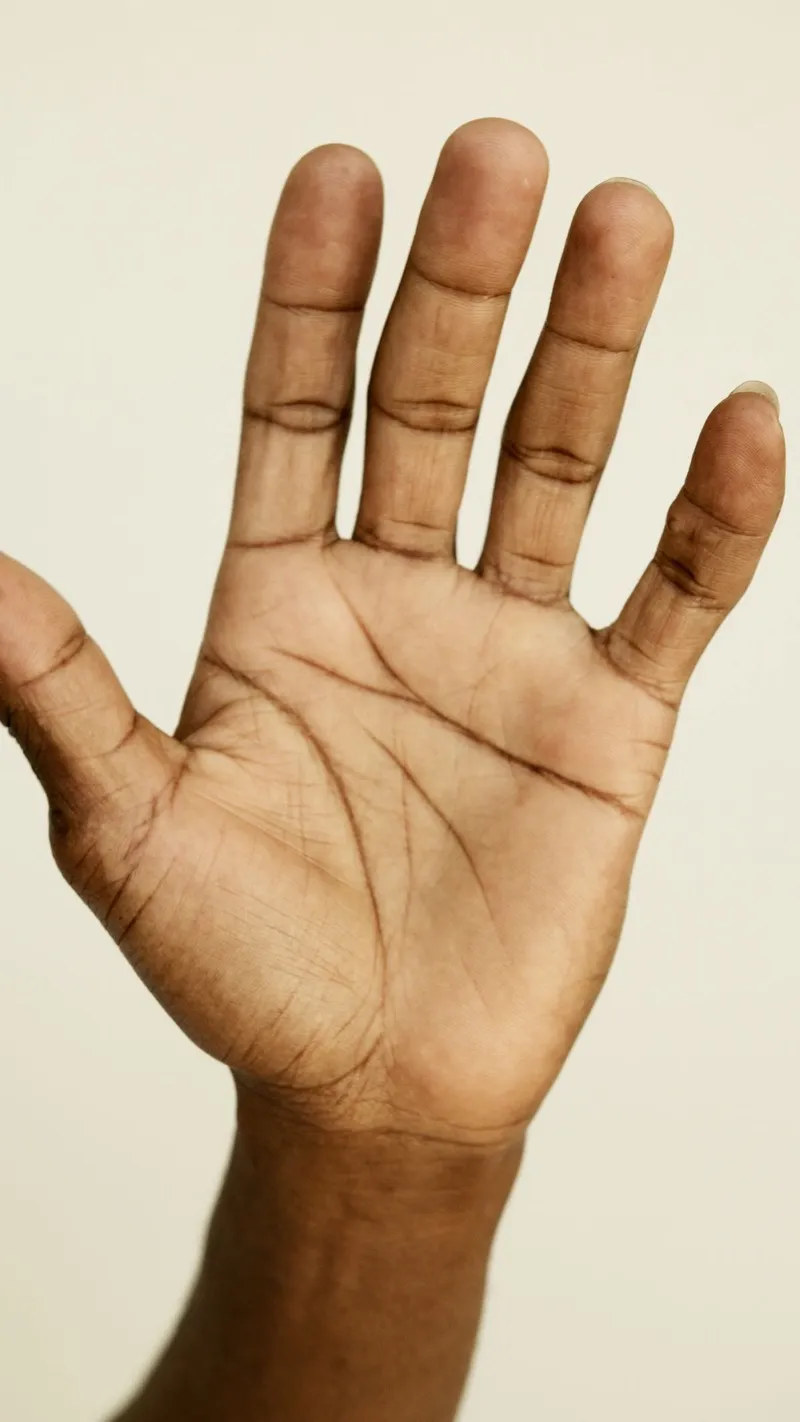
The fate line runs vertically up the centre of the palm toward the middle finger. A fork appears where it splits into two branches, most commonly in its upper section as it nears the fingers, though a fork can occur at any point along the line.
Why a fork reads as addition, not division
As with forks on the other major lines, a fate-line fork extends the line into two directions rather than breaking it. Traditionally this is read as capacity added rather than direction lost — a life that develops a genuine second track alongside the first, both actively pursued rather than one abandoned for the other.
This distinguishes a fork from a break: a break marks a change from one direction to another, while a fork marks two directions held at once.
Where the fork appears
A fork near the top of the line, close to the fingers, is traditionally read as a second direction emerging later in a career or path already well established — a second specialisation building on the first rather than replacing it.
A fork lower on the line, nearer the wrist, is read as two directions present from early on, developing in parallel throughout rather than one following the other.
Reading it with the sun line
A fate line that forks with one branch angling toward the base of the ring finger is often read alongside the sun line's themes — recognition or creative reward running alongside the main direction rather than separate from it.
Where both branches stay vertical and roughly parallel, the reading stays closer to two comparable, independently pursued directions rather than one being subordinate to the other.
Variations
Fork near the fingers
A second direction emerging later, building on an already-established path.
Fork lower on the line
Two directions present from early on, developed in parallel.
Wide-angled fork
Read as two substantially different directions pursued with comparable weight.
Narrow-angled fork
A more closely related second direction — a specialisation rather than a departure.
Fork with one branch toward the ring finger
Read alongside the sun line's themes of recognition or creative reward.
Myth vs. Reality
Myth vs. Reality
| Myth | Reality |
|---|---|
“A forked fate line means an indecisive or unclear path.” | It is traditionally read as two directions actively pursued at once, not confusion about which to choose. |
“A fork is the same thing as a break.” | A break marks a change from one direction to another; a fork marks two directions held at the same time. |
“A forked fate line means an indecisive or unclear path.”
It is traditionally read as two directions actively pursued at once, not confusion about which to choose.
“A fork is the same thing as a break.”
A break marks a change from one direction to another; a fork marks two directions held at the same time.
Common Questions
What does a forked fate line mean?
Traditionally, more than one direction pursued at once — a genuine second path developing alongside the first, not indecision.
Is a forked fate line good or bad?
Neutral to favourable in most readings — it is read as added capacity rather than division.
What is the difference between a forked and a broken fate line?
A fork splits into two continuing branches pursued together; a break is a gap marking a change from one direction to another.
Where does a forked fate line usually appear?
Most often in the upper section of the line, near the fingers, though a fork can occur anywhere along it.
See this on your own palm
Upload a photo and our reader walks the four major lines on your hand, showing you where each one runs and what tradition associates with what it finds.
Read my palm — freeRelated Palmistry Topics
Life Line
The line curving around the thumb, traditionally read as vitality and life transitions.
Read the guide →Heart Line
The horizontal line across the upper palm, read as emotional life and attachment.
Read the guide →Head Line
The line across the middle of the palm, read as thinking style and decision-making.
Read the guide →Fate Line
The vertical line rising up the palm, read as direction and outside forces in life.
Read the guide →Sun Line
Vertical line associated with creativity and recognition.
Read the guide →Marriage Line
Short horizontal lines on the palm edge below the pinky.
Read the guide →