Palm Reading: A Complete Guide to the Lines, Mounts & Marks of Your Hand
A working guide to traditional palmistry — the four major lines, the seven mounts, the marks, and the way Indian, Chinese, and Western readers have approached the palm for the last five thousand years.
Last reviewed: by ReadMyPalms editorial
Quick Answer
What is palm reading?
Palm reading, or palmistry, is the reflective practice of interpreting the lines, mounts, and marks of the hand as symbols of personality, life themes, and inner tendencies. It is a symbolic tradition rather than a predictive science, and has been practised in India, China, and Europe for thousands of years.
A 5,000-Year Tradition
Palmistry is one of the oldest reflective traditions in the world, and it did not emerge from a single place. The earliest written sources we have come from India, where Hast Samudrika Shastra — literally “the ocean of knowledge of the hand” — is a branch of Samudrika Shastra, the Vedic study of bodily marks. Its roots reach back at least three thousand years through texts associated with sages such as Valmiki, and palmistry remained a respected scholarly discipline in classical Indian courts long before it travelled west.
In China, palmistry developed alongside face reading and the diagnostic tradition of traditional Chinese medicine. Chinese palmistry tends to weigh the mounts, finger phalanges, and the colour and texture of the palm at least as heavily as the major lines, and reads the hands in pairs — with conventions about left and right that vary by lineage. The earliest surviving Chinese palmistry texts date roughly to the Tang and Song dynasties, though the practice itself is older.
Western palmistry has older Greek and Roman roots — Aristotle is often cited as having written about the practice — but the system most modern Western readers use today is a 19th-century revival. Two figures dominate that revival: William John Warner, who wrote under the pen name Cheiro, and the American palmist William G. Benham, whose 1900 book The Laws of Scientific Hand Reading codified the system of mounts and hand shapes used in most English-language palmistry today.
These three traditions overlap, but they are not identical. A serious palm reading acknowledges the differences rather than pretending they do not exist. And on one point they all agree: palmistry is a symbolic and reflective practice, not a predictive science. The lines on your hand do not announce a future that has already been written. They offer a map of tendencies, patterns, and possibilities that a thoughtful reader can use as a mirror.
The Four Major Palm Lines
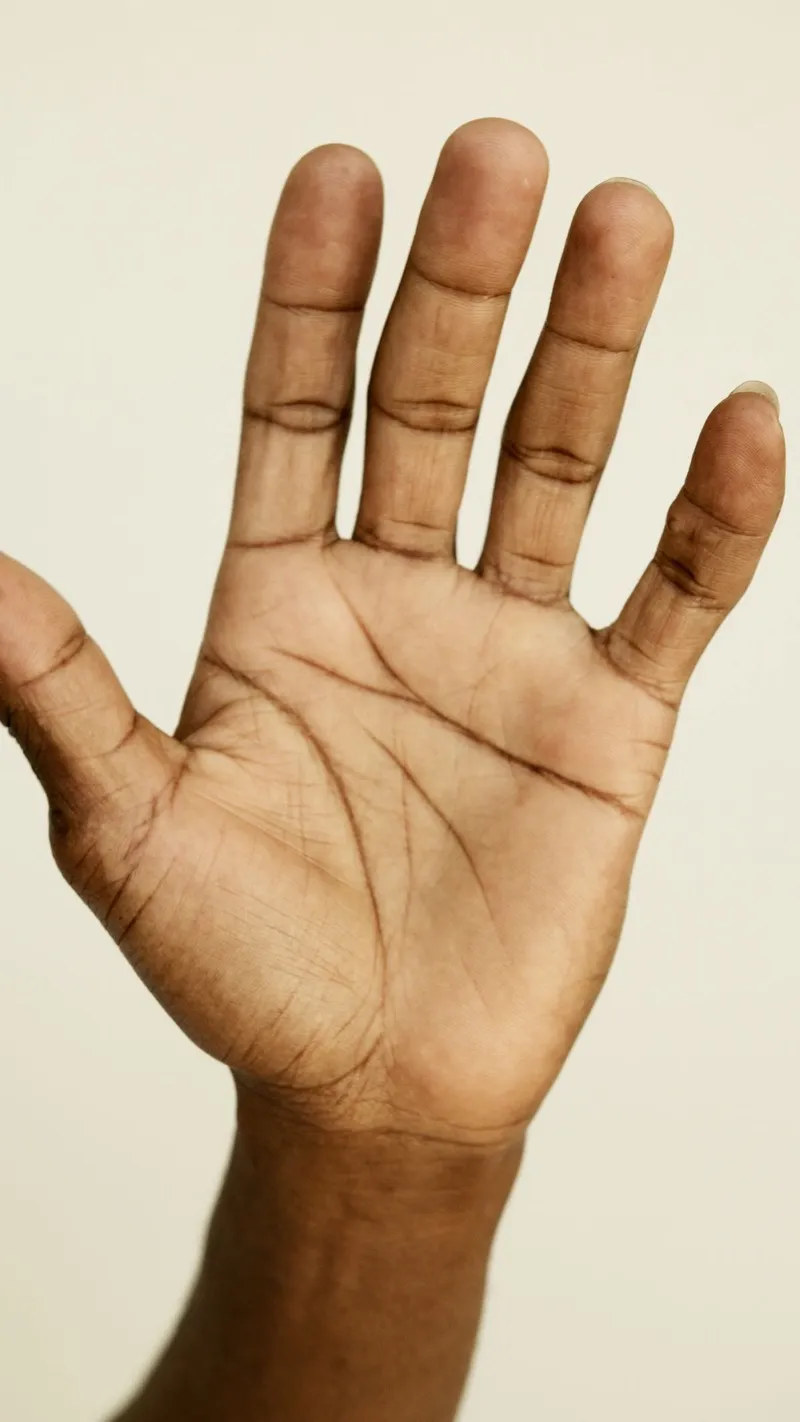
Every palmistry tradition gives primary weight to four lines on the palm. Western readers tend to start with these and add the secondary lines as they go; Indian and Chinese readers usually treat the major lines as one element among many. Either way, learning to identify these four lines is the first step in any palm reading practice.
Life Line
The life line curves around the base of the thumb, starting between the thumb and index finger and arcing down toward the wrist. In traditional palmistry it is read as a reflection of vitality, physical energy, and the major transitions a person moves through. Crucially — and this is the most damaging myth in popular palmistry — the length of the life line does not predict how long a person will live. Breaks and branches are read as transitions, not omens.
Read our full guide on the Life Line →Heart Line
The heart line runs horizontally across the upper palm, just beneath the fingers. It is traditionally read as a reflection of emotional life — how a person loves, attaches, and expresses feeling. A long, curving heart line is associated with warmth and openness; a straight or short heart line is read as a more reserved or self-contained emotional style. Forks, chains, and islands along the line are interpreted as periods of emotional change rather than as warnings.
Full heart line guide coming soon.
Head Line
The head line runs across the middle of the palm, usually starting near the life line on the thumb side and travelling toward the outer edge. It is read as a reflection of how a person thinks — analytical or intuitive, focused or wide-ranging. A long, deep head line is associated with sustained concentration, while a shorter or wavering line is read as a more flexible, exploratory cognitive style.
Full head line guide coming soon.
Fate Line
The fate line runs vertically up the centre of the palm, often from near the wrist toward the base of the middle finger. It is read as a reflection of one’s sense of direction in life and the outside influences — family, work, circumstance — that shape that path. Not everyone has a fate line, and its absence is not considered a negative sign; in many traditions it simply indicates a more self-directed or unconventional path.
Full fate line guide coming soon.
Secondary Lines
Beyond the four major lines, the palm carries a number of secondary lines that traditional palmistry uses to fill in detail. Not everyone has all of these, and their absence is not a deficit — many strong palms carry only the major lines clearly.
Sun Line
Also called the Apollo line, it rises up toward the ring finger and is traditionally associated with creativity, recognition, and a sense of inner light. It does not have to be present for someone to live a fulfilled life — many strong palms lack one.
Marriage Lines
Short horizontal lines on the side of the palm beneath the little finger. In Western palmistry they are read as significant attachments and partnerships rather than literal marriages, with each line marking an emotionally formative relationship.
Health Line
Sometimes called the Mercury line, it travels from the base of the palm toward the little finger. Traditionally read as a reflection of constitution and the body’s capacity to recover, not as a diagnosis of illness.
Money Lines
Small vertical lines beneath the little finger, sometimes grouped with the marriage lines. Read as a reflection of how a person relates to material resources rather than as a literal forecast of wealth.
Travel Lines
Horizontal lines on the percussive edge of the palm (the side opposite the thumb). Traditionally read as significant journeys, relocations, or shifts in environment that shape a person’s outlook.
The Seven Mounts of the Palm
Western palmistry, following Benham, organises the fleshy raised areas of the palm into seven mounts, each named after a classical planet and associated with a particular quality. The size, firmness, and position of a mount is read as the strength of that quality in the person. Indian and Chinese palmistry use related but not identical mount systems.
| Mount | Position on Palm | Traditionally Symbolises |
|---|---|---|
| Mount of Venus | Fleshy area at the base of the thumb | Love, sensuality, vitality, and the capacity for warmth and pleasure. |
| Mount of Jupiter | Beneath the index finger | Ambition, leadership, self-confidence, and a sense of purpose. |
| Mount of Saturn | Beneath the middle finger | Discipline, responsibility, study, and a serious cast of mind. |
| Mount of Apollo | Beneath the ring finger | Creativity, charisma, aesthetic sense, and visible recognition. |
| Mount of Mercury | Beneath the little finger | Communication, commerce, wit, and practical intelligence. |
| Mount of the Moon (Luna) | Outer edge of the palm, opposite the thumb | Imagination, intuition, dreams, and the emotional inner life. |
| Mount of Mars | Two zones — active Mars (between thumb and head line) and passive Mars (above Luna) | Courage, endurance, and how a person handles conflict and resistance. |
Mount-specific guides are in progress; placeholder links will be filled in as those pages publish.
Marks, Signs & Special Symbols
In addition to lines and mounts, palmistry pays close attention to the small marks that form between and across the lines: stars, crosses, triangles, fish, and others. These marks are read in context — a mark’s meaning depends on where it appears, not only on its shape. Indian palmistry in particular has a deep vocabulary of auspicious marks (the fish, or matsya, is the most famous).
A natural letter "M" formed by the heart, head, and life lines together. Popular in modern Hindu-influenced palmistry as a sign of strong intuition and self-determination.
Three or more short lines crossing at a single point. Traditionally read as a moment of sudden change or notable event in the area of the palm where it appears.
Two short lines intersecting at right angles. Generally read as a turning point or a place where two influences meet, with the meaning shaped by location.
Three lines enclosing a small area. Traditionally a favourable mark — it concentrates the energy of whichever mount or line it sits on.
A pointed almond shape in the palm, prized in Indian palmistry as an auspicious sign of fortune, spiritual progress, and recognition.
A three-pronged mark, usually at the end of a major line. Read as a strengthening of the line’s themes and, in Indian tradition, a mark of grace.
Four short lines forming a rectangle. Traditionally a protective mark — read as a containment or preservation of the area it surrounds.
A small oval gap inside a line, splitting and rejoining. Read as a period of difficulty or division within the theme of that line.
Left Hand vs. Right Hand
Which hand to read is one of the questions palmistry traditions disagree about most visibly. There is no single universal rule, and the “correct” answer depends on the tradition you are working within.
- Western palmistry: the dominant hand (the one you write with) is read as your active or current life, while the non-dominant hand reflects inherited tendencies and the potential you were born with. This is the convention popularised by Cheiro and Benham.
- Indian palmistry (Hast Samudrika Shastra): traditionally splits by gender — a man’s right hand and a woman’s left hand are read for active life and destiny, with the other hand showing inherited traits. Many modern Indian palmists have moved away from this gendered approach in favour of dominance, but the classical convention is still widely taught.
- Chinese palmistry: conventions vary by lineage. Some schools read both hands as a single composite reading; others assign past, present, and future themes across the two palms. Some Chinese traditions also incorporate the older “left for men, right for women” rule.
ReadMyPalms follows the Western convention by default. If you are right-handed, scan your right palm; if you are left-handed, scan your left. If you are working within an Indian or Chinese tradition, you may want to adjust accordingly.
How to Read Your Own Palm
You do not need a teacher to begin reading your own palm. A patient afternoon with good light, your dominant hand, and a willingness to look closely will take you a long way.
- Find good light. Natural daylight near a window is best. Avoid harsh overhead light, which flattens the lines and erases the subtle marks.
- Position your hand. Relax your dominant hand and let it open naturally, palm up. Do not stretch the fingers wide — that distorts the lines. A gentle, slightly cupped position shows the truest reading.
- Identify the four major lines first. Locate the life, heart, head, and fate lines. Then notice the mounts as fleshy raised areas, and finally the smaller marks. Start broad, then go in.
- Interpret reflectively, not literally. When a line catches your attention — a break, a fork, an unusual depth — ask what theme that part of the palm represents, and what is happening in your life around that theme. The palm prompts the question; you provide the meaning.
Want a complete reading in under a minute?
Get a Free AI Palm Reading →Common Palm Reading Myths
Palmistry has accumulated a number of popular myths that no serious tradition actually supports. The most damaging are worth naming clearly.
Myth: “A short life line means a short life.”
Reality: no credible palmistry tradition — Indian, Chinese, or Western — supports this. The idea appears to be a 19th-century invention of parlour fortune tellers rather than anything from classical palmistry texts. The life line reflects vitality and major transitions, and its length is not connected to lifespan.
Myth: “A broken life line means illness or death.”
Reality: across all major traditions, breaks and gaps in any line are read as transitions — a change of environment, a turning point, a new chapter. They are not death omens and never have been in serious palmistry literature.
Myth: “Palm lines never change.”
Reality: palm lines do change. They deepen, fade, and develop new marks throughout life as habits, health, and circumstance shift. Traditional palmists recommend revisiting a reading every few years rather than treating a single reading as fixed.
Myth: “Palm reading is a predictive science.”
Reality: palmistry is a symbolic and reflective tradition, not a science. Classical texts present the lines as a map of tendencies, possibilities, and themes — not a verdict. The future is shaped by choice and circumstance; the palm only hints at the terrain.
Browse Palm Reading Topics
The full ReadMyPalms palmistry cluster covers more than forty topics. Below is the complete map — the life line guide is live now, with the rest publishing progressively.
Major Lines
The line curving around the thumb, traditionally read as vitality and life transitions.
Read the guide →The horizontal line across the upper palm, read as emotional life and attachment.
Read the guide →The line across the middle of the palm, read as thinking style and decision-making.
Read the guide →The vertical line rising up the palm, read as direction and outside forces in life.
Read the guide →Secondary Lines
Vertical line associated with creativity and recognition.
Read the guide →Short horizontal lines on the palm edge below the pinky.
Read the guide →Diagonal line traditionally read as constitutional vitality.
Read the guide →Vertical lines branching from marriage lines.
Marks on the Palm
A small star-shaped mark, read as auspicious.
Read the guide →A cross-shaped intersection of lines.
Read the guide →Three lines forming a triangle, traditionally fortunate.
Read the guide →A square formation read as protection.
A cross in the quadrangle — read as intuitive inclination.
Read the guide →An X-shaped intersection.
Read the guide →Signs & Symbols
A natural letter M formed by the heart, head, and life lines together.
Read the guide →The matsya sign in Hindu palmistry, considered very fortunate.
Read the guide →A three-pronged shape extending from a major line.
Line Variants & Special Patterns
What a break in the life line traditionally signifies.
Read the guide →Debunking the myth that a short life line means a short life.
Read the guide →An additional parallel line, traditionally a positive sign.
Read the guide →When the life line splits at the end.
Read the guide →A bounded period of divided energy — not a health diagnosis.
Read the guide →An oval mark on the heart line.
Read the guide →A heart line that looks like linked chains.
Read the guide →A gap in the heart line — emotional transition, not heart trouble.
Read the guide →When the fate line branches.
Read the guide →A split end read as emotional balance — one of the favourable markings.
Read the guide →When the heart and head lines fuse into one.
Read the guide →Joined start reads as caution; a gap reads as independence.
Read the guide →The writer's fork — analytical and creative thinking combined.
Read the guide →A common, favourable-neutral marking — life shaped by choice.
Read the guide →A gap read as a change of direction, not failure.
Read the guide →Usually the sun line or Mercury markings — no single agreed marking.
Read the guide →The Seven Mounts
The fleshy area at the base of the thumb.
Read the guide →The area below the index finger.
The area below the middle finger.
The area below the ring finger.
The area below the pinky finger.
The outer edge of the palm opposite the thumb.
Two areas flanking the head line.
Hand Shapes
Earth, air, fire, and water hand classifications.
Fingers & Thumb
What proportional finger lengths traditionally indicate.
How thumb shape and flexibility are interpreted.
The Jupiter finger and what it symbolizes.
The Mercury finger and what it symbolizes.
Topic Guides
How different palmistry traditions split active and passive hands.
Read the guide →A beginner's step-by-step guide.
Read the guide →Tradition lines and mounts traditionally read for relationships.
How tradition interprets vocational signs.
Money-line tradition and what it actually means.
Frequently Asked Questions
Is palm reading real?
Palm reading is a real tradition with roots in India, China, and the Mediterranean world going back several thousand years. It is real as a symbolic and reflective practice — not as a predictive science. Treat the lines on your palm as prompts for self-reflection rather than statements of fact.
How accurate is palm reading?
Palmistry is symbolic, so accuracy is not really the right measure. A reading is most useful when it resonates and prompts honest reflection. Modern science does not recognise palmistry as a way of forecasting specific events, and no credible palmistry tradition has ever claimed to do so.
Which hand do I read?
ReadMyPalms follows the Western convention by default: the dominant hand (the one you write with) is read as your active or current life, while the non-dominant hand reflects inherited tendencies. Indian and Chinese traditions use different rules, including some gender-based conventions in classical Indian palmistry.
Do palm lines change over time?
Yes. Palm lines deepen, fade, and develop new branches throughout life as habits, health, and circumstances shift. This is one reason traditional palmists recommend revisiting a reading every few years rather than treating any single reading as fixed.
Can palm reading predict the future?
No. Across Indian, Chinese, and Western palmistry, the lines are read as a symbolic map of tendencies and possibilities, not a fixed forecast. A palm reading is best used as a tool for self-reflection — the future itself is shaped by choices the palm cannot decide for you.
How long does it take to learn palmistry?
You can learn to identify the four major lines and the seven mounts in an afternoon. A working familiarity with the secondary lines, special marks, and tradition-specific interpretations usually takes several months of consistent reading and practice. Classical palmistry training in India and Europe historically took years.
What is the difference between Indian, Chinese, and Western palmistry?
Indian palmistry, or Hast Samudrika Shastra, is the oldest of the three and is rooted in Vedic literature going back roughly 3,000 years. Chinese palmistry developed alongside face reading and traditional Chinese medicine, and tends to place strong emphasis on the mounts and finger phalanges. Western palmistry, popularised in the 19th century by Cheiro and Benham, focuses heavily on the four major lines and on hand shape.
Is palm reading safe to do online?
Yes. An online palm reading is simply a digital version of the same reflective practice. Take a clear, well-lit photo of your dominant hand, and treat the resulting reading as a prompt for self-reflection rather than as medical, legal, or financial advice. No reputable palmistry tradition has ever positioned itself as a substitute for professional guidance.
Ready to read your palm?
Upload a photo of your dominant hand for an instant reflective reading, or start with the most-asked-about line on the palm.