Quick Answer
A forked life line — where the line splits into two branches — is traditionally read as a point where life divides into a before and an after. A fork at the wrist end is most commonly associated with relocation, travel or a decisive change of direction, rather than with anything ominous.
Forked Life Line: Meaning of a Split at the End
Last reviewed: 2026-08-17 by ReadMyPalms editorial
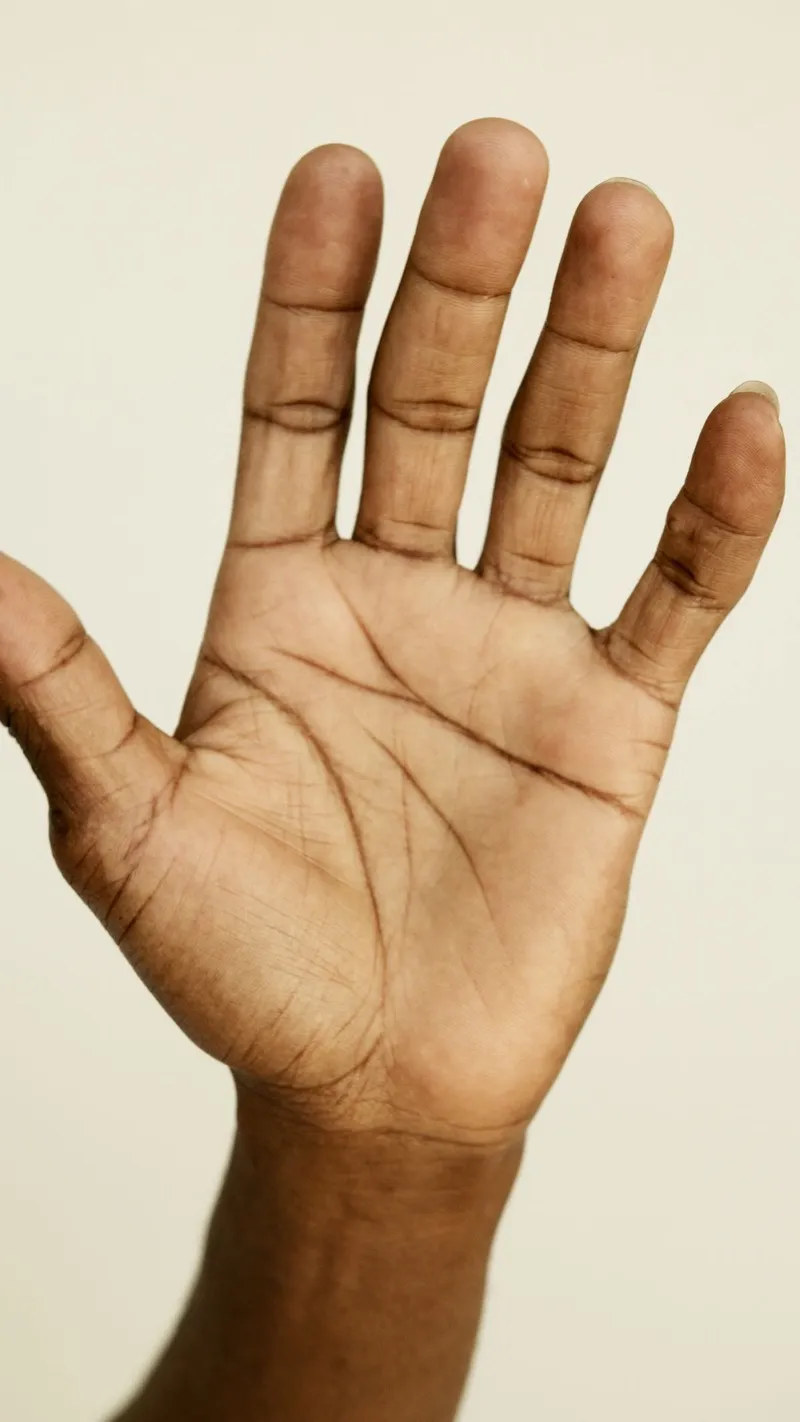
Follow the life line from between the thumb and index finger, around the ball of the thumb, toward the wrist. A fork appears where the single line separates into two branches — most often near the base, occasionally mid-arc.
What a fork traditionally signifies
Across traditions, a fork is read as division of energy rather than loss of it. The line has not broken — it continues in two directions at once, and the reading follows that logic: a life that develops along two tracks, or a point after which the direction changes materially.
Where the branches are roughly equal, the split is read as genuine duality — two commitments, two homes, two bodies of work held simultaneously. Where one branch is markedly fainter, the fainter branch is traditionally read as the path not fully taken.
Position changes the reading
A fork at the very end, near the wrist, is the most common form and is associated with movement — relocation, extended travel, or a late-life change of base. This is the reading most people are looking for when they search for a forked life line.
A fork higher up the arc, closer to the index finger, is read differently: as a division that occurs earlier and shapes the rest of the line. Practitioners typically read this alongside the head line, since an early fork in both is traditionally taken as a decisive independent choice.
Fork, branch, or break?
These three are routinely confused and read very differently. A fork is a clean split into two continuing branches. A branch is a small offshoot that leaves the main line while the line itself carries on unchanged. A break is a gap where the line stops and later resumes.
If the main line continues at full strength past the split, you are looking at a branch, not a fork — and branches are read as additions to a life rather than divisions of it.
Variations
Fork at the wrist end
The most common form. Traditionally associated with relocation, travel, or a change of base later in life.
Wide fork
Read as a pronounced division — two distinct directions pursued in parallel rather than one modified path.
Narrow fork
Associated with a change of emphasis rather than a change of course; the two branches stay close in character.
One faint branch
Traditionally read as an alternative path considered but not fully committed to.
Fork toward the mount of the Moon
A branch curving away toward the outer palm is classically tied to imagination, distance and travel.
Myth vs. Reality
Myth vs. Reality
| Myth | Reality |
|---|---|
“A forked life line means your life will be cut in half.” | A fork is read as division of direction, not shortening. Nothing about hand markings predicts lifespan in any reading tradition. |
“A fork is a bad omen.” | Traditionally it is neutral and frequently read positively — as movement, expansion, or a decisive choice made rather than avoided. |
“A forked life line means your life will be cut in half.”
A fork is read as division of direction, not shortening. Nothing about hand markings predicts lifespan in any reading tradition.
“A fork is a bad omen.”
Traditionally it is neutral and frequently read positively — as movement, expansion, or a decisive choice made rather than avoided.
Common Questions
What does a fork at the end of the life line mean?
It is most commonly read as relocation, travel, or a decisive change of direction later in life. It is a neutral-to-positive marking in traditional readings, not a warning.
Is a forked life line rare?
No. Forks near the wrist end are among the more common life line variations.
What is the difference between a fork and a branch?
A fork splits the line into two continuing branches. A branch is a smaller offshoot leaving a line that otherwise continues unchanged. Forks are read as division of direction; branches as additions.
Does a forked life line mean I will move abroad?
Traditional readings associate an end fork with relocation or travel, but palmistry describes tendencies rather than events. It is not a prediction of a specific move.
See this on your own palm
Upload a photo and our reader walks the four major lines on your hand, showing you where each one runs and what tradition associates with what it finds.
Read my palm — freeRelated Palmistry Topics
Life Line
The line curving around the thumb, traditionally read as vitality and life transitions.
Read the guide →Heart Line
The horizontal line across the upper palm, read as emotional life and attachment.
Read the guide →Head Line
The line across the middle of the palm, read as thinking style and decision-making.
Read the guide →Fate Line
The vertical line rising up the palm, read as direction and outside forces in life.
Read the guide →Sun Line
Vertical line associated with creativity and recognition.
Read the guide →Marriage Line
Short horizontal lines on the palm edge below the pinky.
Read the guide →