Quick Answer
A head line that starts joined to the life line — the two lines touching or overlapping near the thumb before separating — is traditionally read as caution and deliberation early in life: decisions checked against family and circumstance before being made. A head line that starts separate from the life line, with a visible gap between them, is read as independence — confidence acting alone, sometimes at the cost of patience.
Head Line Connected to Life Line: What It Means
Last reviewed: 2026-08-21 by ReadMyPalms editorial
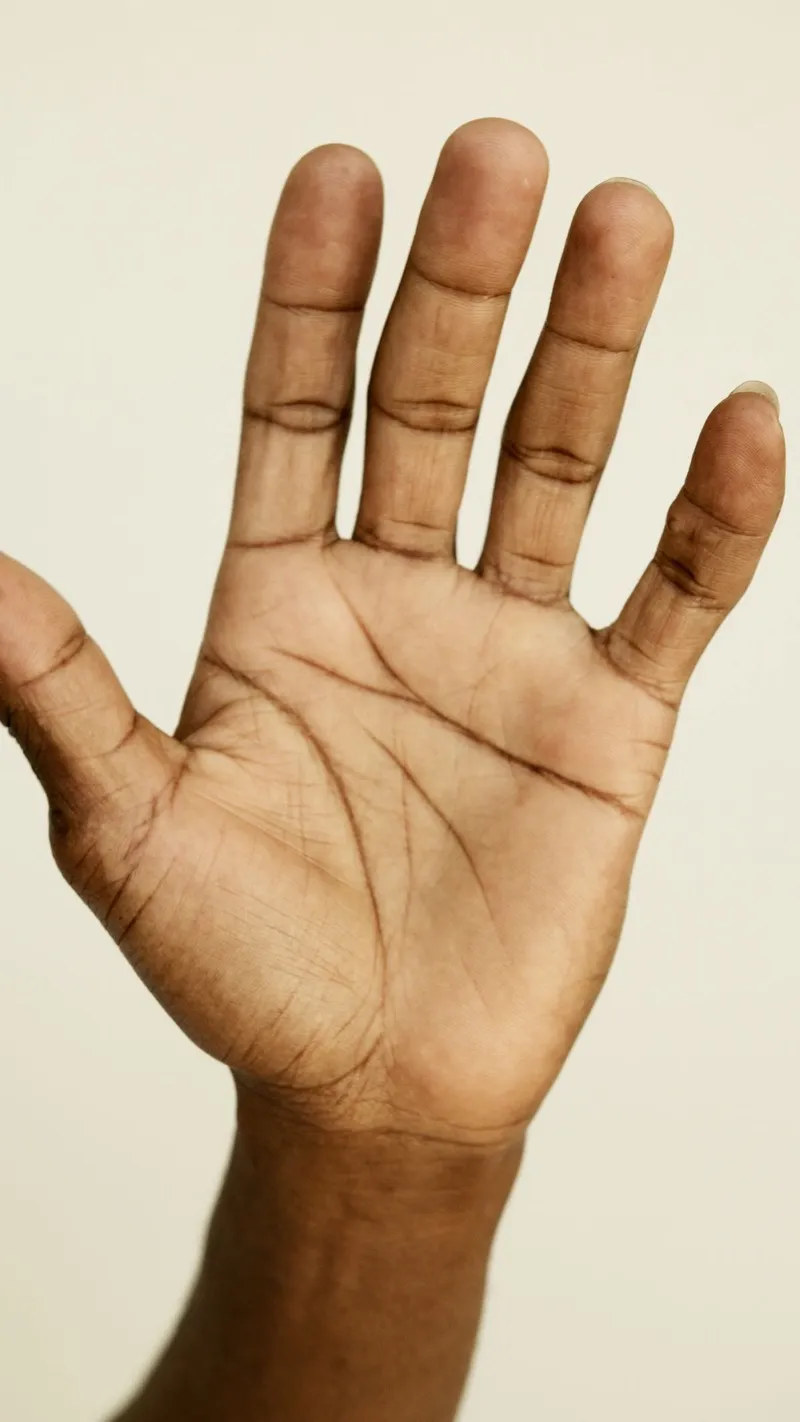
Look at the base of the thumb where the life line begins its arc. The head line starts just above it, also near the thumb-index web. Whether the two lines touch, overlap, or begin with a visible gap between them is the feature this page covers.
The two starting patterns
Where the lines touch or briefly run together before separating, the reading is one of caution: decisions made with reference to others, a considered rather than impulsive temperament, and a strong pull toward family or tradition early on. Where the two lines begin with daylight between them from the start, the reading shifts to independence: self-reliance, willingness to act without waiting for consensus, and confidence that can tip into impulsiveness.
Neither pattern is read as better than the other. Both are common, and most hands show a version of the joined pattern — a fully separated start is the less frequent of the two.
How far apart, and for how long
The length of the join matters as much as its presence. A brief touch that separates quickly is read as caution that eases early — confidence built through experience rather than lacking from the start. A long join, where the two lines run together for a visible stretch before parting, is read as a more sustained dependence on others' judgement before the person acts on their own.
A wide gap from the very start is read as decisiveness present early, sometimes alongside a tendency to act before fully weighing consequences. A narrow gap sits between the two readings.
Reading it with the rest of the hand
This feature is rarely read alone. A joined start paired with a strong, deep head line is traditionally read as caution that sharpens into good judgement rather than hesitancy. The same joined start paired with a faint, wavering head line is read as caution that tips toward self-doubt.
Practitioners commonly treat this as a starting condition rather than a fixed trait — the rest of the head line's length, depth and direction carries most of the reading; the join or gap sets the tone at the beginning.
Variations
Long join, quick separation
Early caution that resolves into independent judgement as experience builds.
Long join, sustained
A more lasting reliance on others' input before acting alone.
Narrow gap from the start
A moderate, balanced reading between caution and independence.
Wide gap from the start
Confidence and self-reliance present early, occasionally at the cost of patience.
Lines touching then diverging sharply
Read as a decisive break from an early cautious pattern — a turn toward independence.
Myth vs. Reality
Myth vs. Reality
| Myth | Reality |
|---|---|
“A joined head and life line means you are indecisive.” | It is read as caution and deliberation, not an inability to decide. Many traditions read it as the more careful, not the weaker, pattern. |
“A gap between the lines means you are reckless.” | It is read as independence and self-reliance. Confidence and recklessness are read very differently across traditions. |
“A joined head and life line means you are indecisive.”
It is read as caution and deliberation, not an inability to decide. Many traditions read it as the more careful, not the weaker, pattern.
“A gap between the lines means you are reckless.”
It is read as independence and self-reliance. Confidence and recklessness are read very differently across traditions.
Common Questions
What does it mean if your head line touches your life line?
Traditionally read as caution and deliberation — decisions weighed against family or circumstance, especially early in life.
What does a gap between the head line and life line mean?
Read as independence: confidence to act without waiting on others’ input, which can tip into impulsiveness if pronounced.
Is it better to have the lines joined or separate?
Neither is read as better. They describe different temperaments — careful versus self-reliant — rather than a stronger or weaker hand.
Can this change over time?
Palm lines change gradually over years. A long join easing into a gap is a normal observation, traditionally read as confidence building with experience.
See this on your own palm
Upload a photo and our reader walks the four major lines on your hand, showing you where each one runs and what tradition associates with what it finds.
Read my palm — freeRelated Palmistry Topics
Life Line
The line curving around the thumb, traditionally read as vitality and life transitions.
Read the guide →Heart Line
The horizontal line across the upper palm, read as emotional life and attachment.
Read the guide →Head Line
The line across the middle of the palm, read as thinking style and decision-making.
Read the guide →Fate Line
The vertical line rising up the palm, read as direction and outside forces in life.
Read the guide →Sun Line
Vertical line associated with creativity and recognition.
Read the guide →Marriage Line
Short horizontal lines on the palm edge below the pinky.
Read the guide →