Quick Answer
Most palmistry traditions read both hands, assigning them different roles rather than treating one as correct and the other as irrelevant. The common convention is that the dominant hand shows the life as it is actively being lived and shaped by choice, while the non-dominant hand shows inherited disposition and potential present from birth.
Left vs Right Hand: Which One Should You Read?
Last reviewed: 2026-08-21 by ReadMyPalms editorial
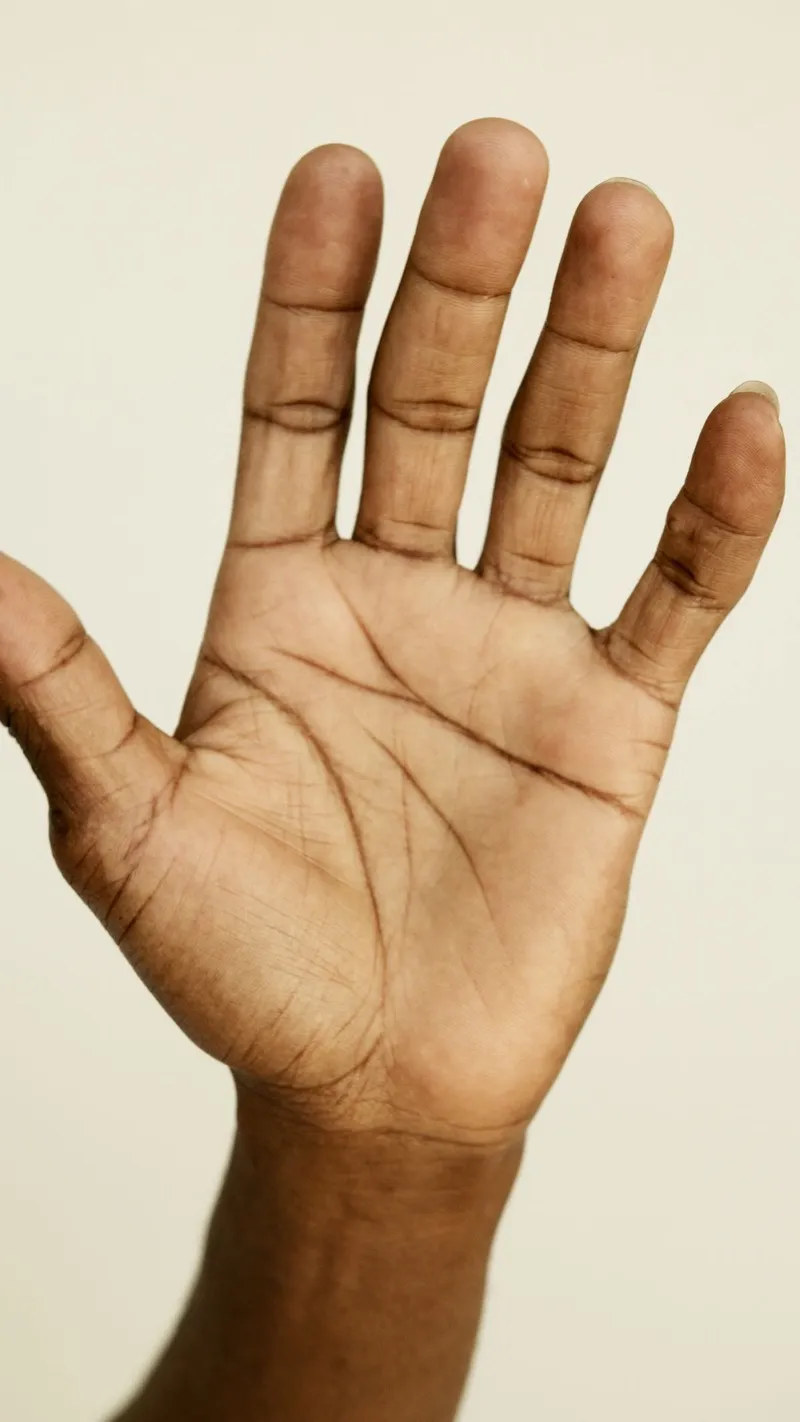
Compare the same lines and markings across both palms rather than reading just one. Differences between them are expected and are themselves part of the reading, not a sign that one hand is wrong.
The dominant/non-dominant convention
The most widely used convention reads the dominant hand — the one used for writing, for most people the right hand — as the record of a life shaped by choices actually made: decisions, effort, and change accumulated over time. The non-dominant hand is read as the starting point: inherited temperament and potential present before circumstance and choice began shaping it.
Under this reading, differences between the two hands are not a contradiction to resolve but the most informative part of the reading — they show how much a person has moved from their starting disposition through their own decisions.
An older active/passive convention
An older and less commonly used convention assigns "active" and "passive" roles by gender rather than by hand dominance, with variations across regional traditions on which hand is read as which. Most contemporary practice has moved away from this in favour of the dominant/non-dominant convention, which does not depend on assumptions the older version made.
Given the variation between traditions here, the dominant-hand convention is the more consistent and widely used starting point for a modern reading.
What to actually do with two different hands
Read the non-dominant hand first for the baseline disposition, then the dominant hand for how that disposition has been lived out. A line that is faint on the non-dominant hand and strong on the dominant one is traditionally read as a quality that was latent and has since been actively developed.
A marking present on the non-dominant hand but absent on the dominant one is read as a disposition present at the start that has not been strongly expressed through the choices actually made.
Myth vs. Reality
Myth vs. Reality
| Myth | Reality |
|---|---|
“You should only ever read one hand.” | Most traditions read both, and the difference between them is a core part of the reading, not a problem to be resolved by picking one. |
“The non-dominant hand is meaningless.” | It is read as the inherited baseline against which the dominant hand's lived changes are measured — not irrelevant, but answering a different question. |
“You should only ever read one hand.”
Most traditions read both, and the difference between them is a core part of the reading, not a problem to be resolved by picking one.
“The non-dominant hand is meaningless.”
It is read as the inherited baseline against which the dominant hand's lived changes are measured — not irrelevant, but answering a different question.
Common Questions
Which hand should be read in palmistry — left or right?
Most traditions read the dominant hand (usually the writing hand) as the life being lived, and the non-dominant hand as inherited disposition.
Why do my two hands have different lines?
This is expected. Differences are traditionally read as the distance between inherited disposition and the life actually shaped by choice.
Is the left hand always read for women and right for men?
That older convention has largely been replaced by reading based on hand dominance rather than gender, which most contemporary practice now uses.
Should a reading use both hands or just one?
Both, where possible. Reading only one hand misses the comparison that traditions treat as the most informative part.
See this on your own palm
Upload a photo and our reader walks the four major lines on your hand, showing you where each one runs and what tradition associates with what it finds.
Read my palm — freeRelated Palmistry Topics
Life Line
The line curving around the thumb, traditionally read as vitality and life transitions.
Read the guide →Heart Line
The horizontal line across the upper palm, read as emotional life and attachment.
Read the guide →Head Line
The line across the middle of the palm, read as thinking style and decision-making.
Read the guide →Fate Line
The vertical line rising up the palm, read as direction and outside forces in life.
Read the guide →Sun Line
Vertical line associated with creativity and recognition.
Read the guide →Marriage Line
Short horizontal lines on the palm edge below the pinky.
Read the guide →