Quick Answer
What does the Mount of Venus actually reveal? Capacity for warmth, not depth of love.
The Mount of Venus is the fleshy area at the base of the thumb, traditionally read as the seat of love, sensuality, and vital warmth. A full Mount of Venus is read as an outwardly warm temperament; a flatter mount as a more reserved one. Neither is a verdict on the quality of any relationship. It describes how someone gives warmth, not how much they care.
Mount of Venus: Meaning, Size & Love Reading in Palmistry
Last reviewed: 2026-06-27 by ReadMyPalms editorial
A reflective guide to the fleshy thumb-base mount in traditional Western, Hindu, and Chinese palmistry — what its size, lines, and marks symbolise about emotional temperament.
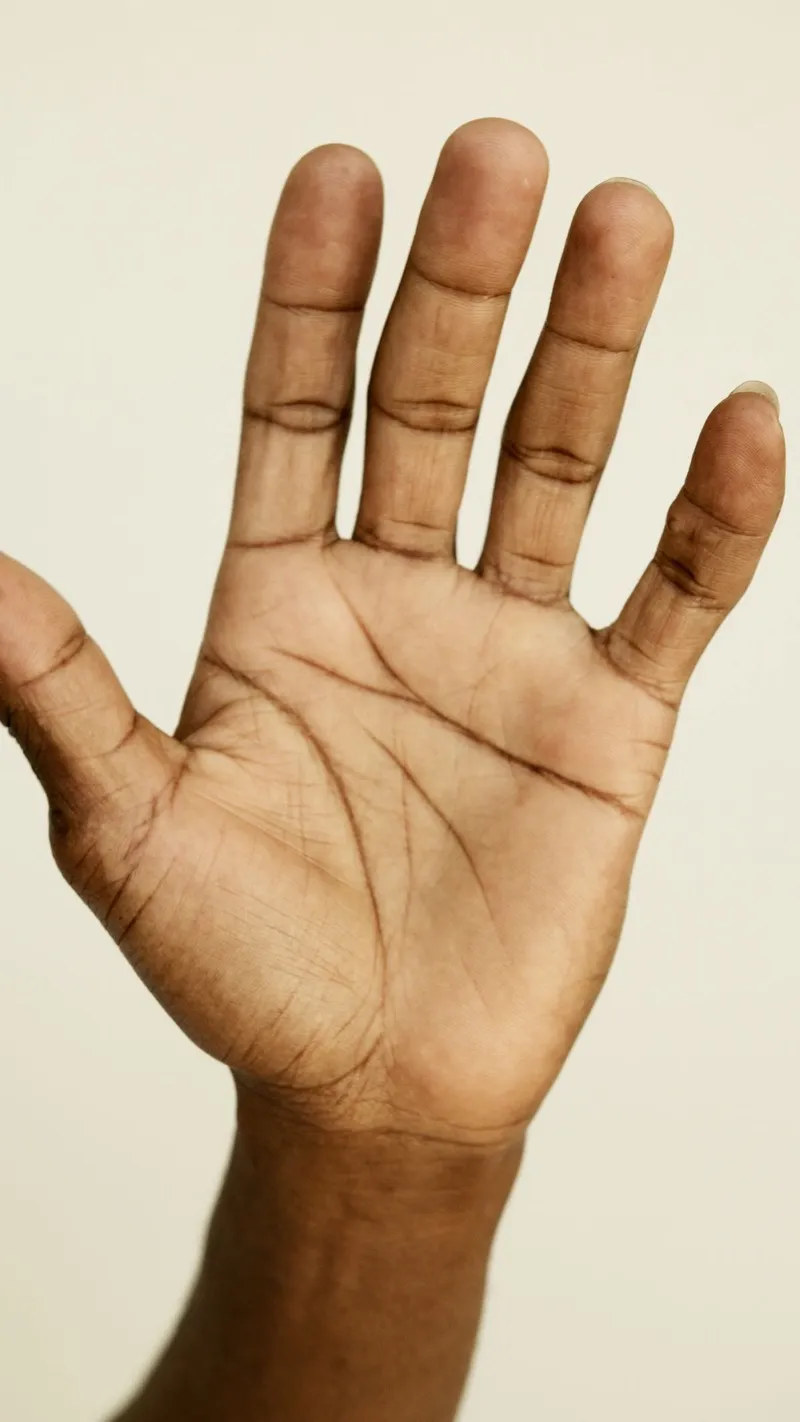
The Mount of Venus sits at the base of the thumb, enclosed by the curve of the life line. It is the largest and most cushioned of the seven palm mounts.
What Is the Mount of Venus?
The Mount of Venus is the fleshy, cushioned area at the base of the thumb, encircled by the inner curve of the life line. It is the largest of the seven traditional mounts of the palm and the easiest to identify — it is the only mount that sits at the thumb base, and it is by a wide margin the most obviously fleshy area of the hand.
Western palmistry, following Cheiro and Benham, names this mount after Venus, the Roman goddess of love. Hindu palmistry calls the same region Shukra Sthana — the place of Venus (Shukra) — and reads it through the same symbolic lens. Chinese palmistry recognises the region as the seat of warmth and family feeling. Across all three traditions the Mount of Venus is treated as the region of love, sensuality, vitality, and the capacity for warmth and pleasure.
What the Mount of Venus Symbolises
Capacity for Love
The first and central reading of the Mount of Venus is the capacity for warmth. Note the careful word — capacity, not amount, not worth, not depth. A full Venus mount is read as a person whose warmth flows outward visibly, whose presence carries an unmistakable affection, and who is generally easy to be close to. A flat or under-developed mount is read as a person whose warmth is real but interior — given in fewer signals, but no less felt by them. Both temperaments love. The mount describes how love is expressed, not whether it exists.
Sensuality and the Body
The second classical reading is sensuality — the relationship between a person and the body. A full Mount of Venus is traditionally read as a temperament comfortable in its body, drawn to physical experience, and at ease with sensual pleasure: food, touch, music, beauty. A flatter mount is read as a more cerebral temperament, less moved by the senses and more moved by ideas. Western palmistry has the richest vocabulary for this register; Hindu palmistry frames it more carefully, often through the lens of family life and married sensuality rather than sensuality in general.
Vital Energy
The third reading is vital energy — physical vitality, stamina, and the felt sense of being alive. Because the Mount of Venus sits where the radial artery runs close to the surface, classical palmistry tied its fullness to circulation and life-force. A full, firm mount is read as a temperament with deep reserves of energy; a soft or hollow mount is read as a season of lower vitality. Crucially this is read as a present-tense indicator that can change with health and life circumstance, never as a fixed prognosis.
Family and Belonging
The fourth reading, emphasised especially in Hindu and Chinese palmistry, is family and belonging. The Mount of Venus is read as the region of the family bond — the warmth that holds a household together, the easy comfort of old friendship, the pleasure of long company. A well-marked Venus mount is read as a temperament that finds belonging easily and gives it back. A sparser mount is read as a more solitary temperament, content with smaller, deeper connection rather than wide family warmth. As with every palm reading, these are descriptions of taste, not verdicts of worth.
How to Read the Mount of Venus — Size, Lines, and Marks
Reading the Mount of Venus traditionally involves observing four properties: size, firmness, lines on it, and specific marks. Each carries a distinct meaning.
Size is the most weighted observation. A full Mount of Venus — one that swells noticeably from the rest of the palm — is read as expressive warmth, strong sensuality, and high vital energy. A moderate mount, which is the most common, is read as balanced warmth: present but not outwardly performative. A flat mount is read as reserved emotional expression and a more cerebral relationship with the body.
Firmness modifies size. A full firm mount is read as warmth with substance — emotional energy that holds steady. A full but soft mount is read as warmth that runs more diffusely — affection given easily, sometimes without much filter. A firm, flat mount is read as quietly resilient emotional energy. A soft, flat mount is read as a temperament currently low on vitality, often tied to a season of life rather than to character.
Lines on the mount add nuance. Many small lines are read as emotional sensitivity — an active inner life with many influences. Few, clean lines are read as a more focused, steady emotional life. Vertical lines are read as energy and influences (and sometimes as relationships, in Hindu palmistry); horizontal lines are read as obstacles or interruptions to emotional flow.
Specific marks on the Mount of Venus carry their own readings. Stars are traditionally read as moments of significant attachment or attraction. Crosses as emotional turning points or significant relationships. Squares as protection through emotional difficulty. Triangles as particularly auspicious emotional intelligence. Read in combination, these marks give the Venus mount its detailed reading; read in isolation, each one is just a small piece of the picture.
Common Mount of Venus Variations
Full and Firm Venus Mount
A full, firm Mount of Venus is the configuration Cheiro called “the loving hand.” In tradition it is read as a temperament with strong emotional warmth, clear sensuality, and high vital energy — someone whose presence carries affection easily. This is one of the most common configurations and is read positively across all major traditions.
Flat or Hollow Venus Mount
A flat or hollow Mount of Venus is read as a more reserved, interior emotional life. It is never read in tradition as coldness or incapacity. Instead it points to a temperament that gives warmth in fewer, quieter signals — affection that is real but understated. Many people with flat Venus mounts have rich, deep emotional lives expressed through means other than physical warmth.
Venus Mount with Many Crossed Lines
A Venus mount covered in many small intersecting lines is read as high emotional sensitivity. Hindu palmistry calls this configuration jala rekha (“water lines”) and reads it as a temperament that registers emotional nuance vividly — both the joys and the difficulties of others’ feelings. This is read as a sign of empathic gift, not as instability.
Venus Mount with a Clear Star
A clear star — five or more short lines crossing at a single point — on the Mount of Venus is traditionally read as a significant attachment that has shaped, or will shape, the person’s emotional life. Both Western and Hindu palmistry treat the star on Venus as a meaningful, memorable mark. The reading is symbolic rather than predictive: the star describes attachment that matters, not a date.
What the Mount of Venus Does NOT Mean
The Venus mount attracts more lurid interpretation than almost any other palmistry feature. Here are the five most common myths, each with the tradition correction.
Myth: “A large Mount of Venus means I’ll have many lovers.” Reality: no classical tradition reads any mount as a count of relationships. The Venus mount describes capacity for warmth, not number of partners. People with full Venus mounts have the full range of romantic lives that people with flat ones do.
Myth: “A flat Mount of Venus means I’m cold or incapable of love.” Reality: this is explicitly wrong in every tradition. A flat mount is read as reserved expression, not absence of love. Many people with flat Venus mounts love very deeply; they simply do not radiate warmth outward in the same visible way.
Myth: “Lines on the Mount of Venus predict cheating.” Reality: no classical palmistry source reads any palm mark as a moral verdict on fidelity. The lines on the Venus mount describe sensitivity and influences — emotional weather, not ethical behaviour. The cheating-prediction framing is a modern internet invention.
Myth: “Your Mount of Venus determines how attractive you are.” Reality: the Venus mount has nothing to do with physical attractiveness, in any tradition. It describes inner warmth and vitality, which sometimes contribute to charisma, but no palm feature determines — or even predicts — how others will perceive you.
Myth: “A clear Mount of Venus guarantees marital happiness.” Reality: a clear, full Venus mount is read positively but never as a guarantee of anything specific. Relationships are made and sustained by people, not by palm features. The mount is a description of temperament, not a fortune-teller.
Tradition Attribution: Venus Across Schools
Western palmistry, in Cheiro and William Benham, gives the Mount of Venus the richest treatment. Benham’s The Laws of Scientific Hand-Reading devotes a full chapter to the Venus mount and frames it around vitality, sensuality, and emotional warmth in something close to the modern English vocabulary of love.
Hindu palmistry — Hast Samudrika Shastra — calls the same region Shukra Sthana, the seat of Shukra (Venus). The reading is similar but with stronger emphasis on family life, married sensuality, and the domestic warmth of belonging. Sub-marks on the mount are catalogued in detail.
Chinese palmistry reads the same area as the seat of family feeling and warmth, often translated as the “Earth” region of the palm. Specific vocabulary differs but the core reading — warmth, vitality, family — is consistent.
How to Read Your Own Mount of Venus
Reading the Mount of Venus takes about five minutes if you have natural light and a relaxed hand.
- Open your dominant hand fully. Sit by a window. The Mount of Venus is the fleshy region at the thumb base, encircled by the life line. It is the easiest mount to find.
- Assess size and firmness. Is it noticeably swollen, level with the rest of the palm, or hollowed? Press gently — is it firm or soft? Note what you see.
- Count the lines. Many fine lines, or a few clear ones, or virtually none? Look for vertical and horizontal patterns.
- Look for marks. Search for stars (multiple lines crossing at one point), crosses (two lines forming an X), squares (four lines forming a rectangle), and triangles (three lines closing a triangular space).
- Interpret reflectively. A full firm mount with a few clean lines speaks of steady warmth; a hollow mount with many fine crossings speaks of reserved sensitivity. Map what you see onto what you know of yourself, not the other way around.
Want an AI-assisted reading of your Mount of Venus and the other six mounts?
Get a Free AI Palm Reading →Frequently Asked Questions
What is the Mount of Venus in palmistry?
The Mount of Venus is the fleshy, cushioned area at the base of the thumb, encircled by the life line. It is one of the seven traditional mounts of the palm and is read as the region of love, sensuality, vitality, and the capacity for warmth and pleasure.
Does a large Mount of Venus mean someone is more loving?
Not literally. A full Venus mount is read as a temperament with strong outward warmth, sensual presence, and vital energy. A flatter mount is read as a more reserved emotional life. Neither is a verdict on how much someone loves.
Where is the Mount of Venus on the palm?
At the base of the thumb, enclosed by the curve of the life line. It is the largest mount and the most cushioned area of the palm.
What do lines on the Mount of Venus mean?
Many small lines are read as emotional sensitivity; a few clean lines are read as a more focused emotional life. Vertical lines are read as energy and influences, horizontal lines as obstacles, crosses as turning points.
What does a flat Mount of Venus mean?
A more reserved, self-contained emotional life. It is never read as inability to love. Tradition treats it as one temperament among several.
Is the Mount of Venus the same in different traditions?
Largely yes. Western, Hindu (Shukra Sthana), and Chinese palmistry all locate it at the thumb base and read it as the region of warmth, vitality, and the emotional/sensual life. The core reading is consistent.
Can the Mount of Venus change over time?
Yes. The fleshiness and tone can shift with health and circumstance. Tradition reads a thinning mount as low vitality and a filling mount as a return of warmth and energy.
How Mount of Venus Is Read Across Traditions
Palmistry is a layered tradition, not a single system. Indian, Chinese, and Western lineages each read the mount of venus a little differently — here is how the same line is named and interpreted across the three schools.
| Tradition | Local Term | Meaning |
|---|---|---|
| Indian (Hast Samudrika Shastra) | Shukra Parvat / शुक्र पर्वत | In Hast Samudrika Shastra the Shukra Parvat, ruled by Shukra (Venus), is traditionally read as the seat of kama (desire), family bonds, artistic refinement, and ojas (vital essence). Classical texts often link a well-developed mount to grihastha harmony — domestic and ancestral connection rather than purely romantic attraction. |
| Chinese (手相 Shǒuxiàng) | 金星丘 / Jīnxīng Qiū (Venus Mound) | In Chinese palmistry the Jīnxīng Qiū is traditionally interpreted through TCM and the five elements, read as a marker of qi reserves, kidney/jing vitality, and warmth toward family. Some lineages pair it with face reading and the philtrum to assess fertility and stamina. |
| Western (Cheiro / Benham revival) | Mount of Venus | Cheiro and Benham popularised the Mount of Venus as the seat of love, passion, sympathy, and aesthetic sense, governed by the planet Venus. Benham distinguished a 'higher' Venus (sympathy, music, art) from a 'lower' Venus (physical passion), a more psychologised reading than the Indian or Chinese treatments. |
Shukra Parvat / शुक्र पर्वत
In Hast Samudrika Shastra the Shukra Parvat, ruled by Shukra (Venus), is traditionally read as the seat of kama (desire), family bonds, artistic refinement, and ojas (vital essence). Classical texts often link a well-developed mount to grihastha harmony — domestic and ancestral connection rather than purely romantic attraction.
金星丘 / Jīnxīng Qiū (Venus Mound)
In Chinese palmistry the Jīnxīng Qiū is traditionally interpreted through TCM and the five elements, read as a marker of qi reserves, kidney/jing vitality, and warmth toward family. Some lineages pair it with face reading and the philtrum to assess fertility and stamina.
Mount of Venus
Cheiro and Benham popularised the Mount of Venus as the seat of love, passion, sympathy, and aesthetic sense, governed by the planet Venus. Benham distinguished a 'higher' Venus (sympathy, music, art) from a 'lower' Venus (physical passion), a more psychologised reading than the Indian or Chinese treatments.
Myth vs. Reality
The mount of venus attracts more pop-culture invention than almost any other palm feature. These are the claims you will find on low-quality palmistry sites — and how traditional palmistry across Indian, Chinese, and Western schools actually reads them.
| Myth | Reality |
|---|---|
“A large, fleshy Mount of Venus guarantees a passionate love life and many romantic partners.” | Across Western, Indian, and Chinese lineages the mount is read symbolically as vitality, affection, and warmth — not as a literal count of partners. Benham warned that a very full Venus without supporting lines could indicate self-indulgence rather than fulfilled love. Sources: Benham, Laws of Scientific Hand Reading (1900), Cheiro, Language of the Hand (1894) |
“A flat or 'absent' Mount of Venus means a person is cold, sexless, or incapable of love.” | Traditionally a low or flat Venus is read as reduced physical vitality or a reserved temperament — not absence of love. Indian Hast Samudrika texts and Western writers like Benham both emphasise that affection is also read from the heart line, thumb, and overall hand balance. Sources: Benham, Laws of Scientific Hand Reading (1900), Hast Samudrika Shastra tradition |
“The Mount of Venus on the left hand shows your love life, and the right hand shows your sex life.” | This split is a modern internet simplification. Classical Western palmistry treats the non-dominant hand as inherited potential and the dominant as developed; Indian palmistry reads the male's right and female's left as active. None of the major lineages assign 'love vs sex' to specific hands. Sources: Cheiro, Language of the Hand (1894), Hast Samudrika Shastra tradition |
“Lines crossing the Mount of Venus predict the exact number of relationships or heartbreaks.” | Cheiro and later Western writers describe these as 'influence lines' representing people felt strongly by the subject — not a literal partner count. Indian and Chinese traditions read them as family or karmic ties; all schools treat them as suggestive rather than a tally. Sources: Cheiro, Language of the Hand (1894), Benham, Laws of Scientific Hand Reading (1900) |
“A Mount of Venus crossed by a grille or many fine lines is a bad sign meaning betrayal or scandal.” | Benham traditionally read a grille on Venus as intensified passion needing healthy outlet, while Indian palmistry often reads dense markings here as strong family or ancestral bonds. None of the classical schools treat it as a guaranteed omen of betrayal. Sources: Benham, Laws of Scientific Hand Reading (1900), Hast Samudrika Shastra tradition |
“A large, fleshy Mount of Venus guarantees a passionate love life and many romantic partners.”
Across Western, Indian, and Chinese lineages the mount is read symbolically as vitality, affection, and warmth — not as a literal count of partners. Benham warned that a very full Venus without supporting lines could indicate self-indulgence rather than fulfilled love.
Sources: Benham, Laws of Scientific Hand Reading (1900), Cheiro, Language of the Hand (1894)
“A flat or 'absent' Mount of Venus means a person is cold, sexless, or incapable of love.”
Traditionally a low or flat Venus is read as reduced physical vitality or a reserved temperament — not absence of love. Indian Hast Samudrika texts and Western writers like Benham both emphasise that affection is also read from the heart line, thumb, and overall hand balance.
Sources: Benham, Laws of Scientific Hand Reading (1900), Hast Samudrika Shastra tradition
“The Mount of Venus on the left hand shows your love life, and the right hand shows your sex life.”
This split is a modern internet simplification. Classical Western palmistry treats the non-dominant hand as inherited potential and the dominant as developed; Indian palmistry reads the male's right and female's left as active. None of the major lineages assign 'love vs sex' to specific hands.
Sources: Cheiro, Language of the Hand (1894), Hast Samudrika Shastra tradition
“Lines crossing the Mount of Venus predict the exact number of relationships or heartbreaks.”
Cheiro and later Western writers describe these as 'influence lines' representing people felt strongly by the subject — not a literal partner count. Indian and Chinese traditions read them as family or karmic ties; all schools treat them as suggestive rather than a tally.
Sources: Cheiro, Language of the Hand (1894), Benham, Laws of Scientific Hand Reading (1900)
“A Mount of Venus crossed by a grille or many fine lines is a bad sign meaning betrayal or scandal.”
Benham traditionally read a grille on Venus as intensified passion needing healthy outlet, while Indian palmistry often reads dense markings here as strong family or ancestral bonds. None of the classical schools treat it as a guaranteed omen of betrayal.
Sources: Benham, Laws of Scientific Hand Reading (1900), Hast Samudrika Shastra tradition
Related Palmistry Topics
The Mount of Venus is one of seven traditional palm mounts. Explore the rest of the cluster:
Life Line
The line curving around the thumb, traditionally read as vitality and life transitions.
Read the guide →Heart Line
The horizontal line across the upper palm, read as emotional life and attachment.
Read the guide →Head Line
The line across the middle of the palm, read as thinking style and decision-making.
Read the guide →Fate Line
The vertical line rising up the palm, read as direction and outside forces in life.
Read the guide →Sun Line
Vertical line associated with creativity and recognition.
Read the guide →Marriage Line
Short horizontal lines on the palm edge below the pinky.
Read the guide →