Quick Answer
A triangle on the palm forms where three lines meet to enclose a small triangular area. Traditionally it is read as one of the more favourable markings in palmistry — associated with balance, applied skill, and the ability to bring ideas into practical form — with the specific reading shaped by which mount or line it appears near.
Triangle on Palm: Meaning and Placement
Last reviewed: 2026-08-21 by ReadMyPalms editorial
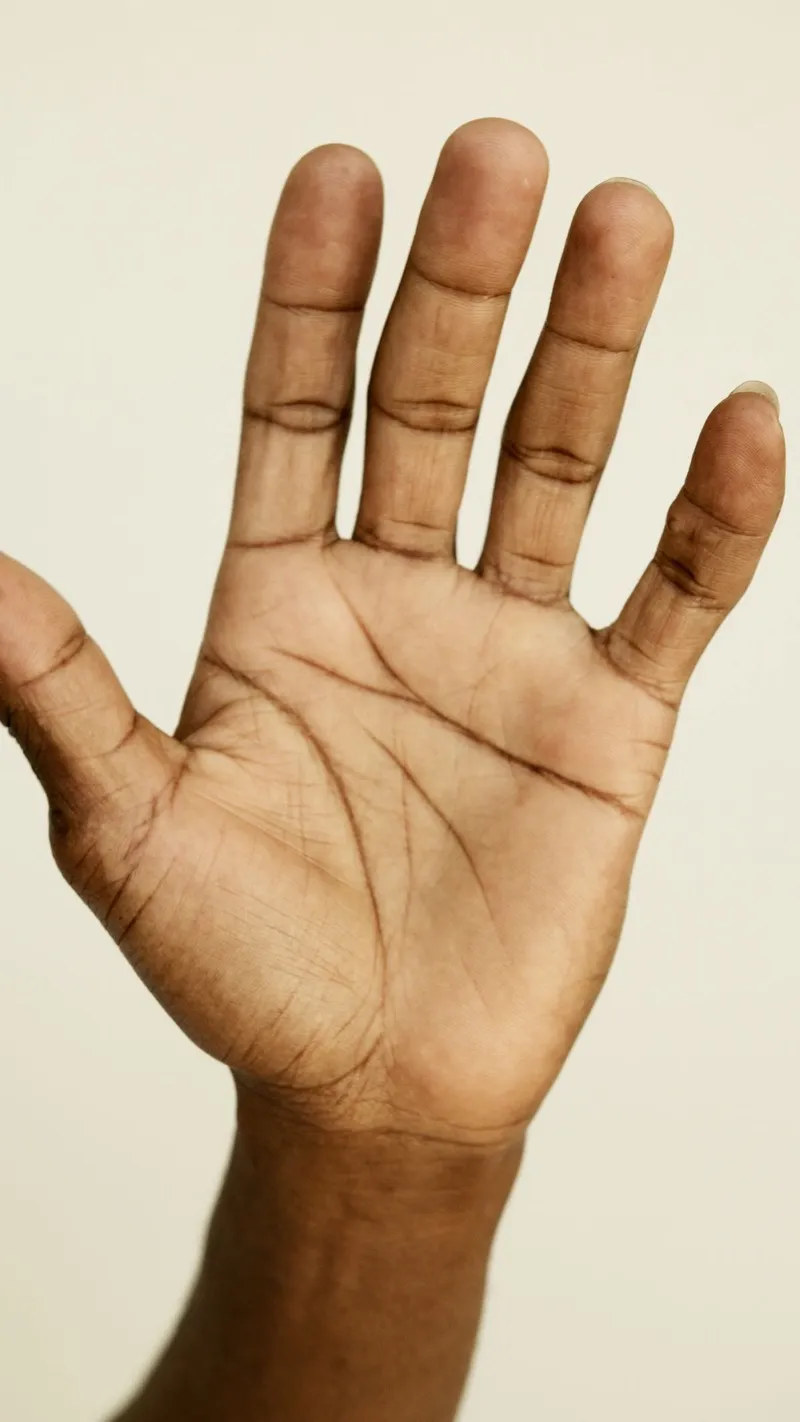
A triangle is a small enclosed shape formed by three crossing lines, distinct from a single line's curve. It can appear on any mount or in the open palm, and is usually only a few millimetres across.
Why the triangle is read favourably
Three converging lines are traditionally read as balance — the meeting of three forces or qualities rather than a single trait dominating. This is why the triangle carries a broadly positive reading across traditions: it represents proportion and applied capability rather than excess or deficiency.
A well-formed, clearly enclosed triangle is read more favourably than a loose or poorly closed one, where the "enclosure" is more suggestion than shape.
Triangle on the mounts
On the mount of Jupiter, a triangle is traditionally read as diplomatic skill and the ability to lead without dominating. On the mount of Saturn, as sound judgement applied to practical matters. On the mount of Apollo, as talent that is genuinely realised into recognised work rather than left undeveloped.
On the mount of Mercury, a triangle is read as scientific or analytical aptitude — the capacity to reason through a problem methodically.
Triangle formed by the major lines
A triangle formed where the life, head and fate lines meet or nearly meet in the centre of the palm is a distinct and more significant version of this mark. Traditionally called the great triangle, a large, well-formed version is read as a particularly favourable combination: vitality, clear thinking and direction working together rather than in tension.
A small or poorly formed version of this same central triangle is read more modestly, as the same combination present but less pronounced.
Variations
Triangle on the mount of Jupiter
Diplomatic skill and leadership that does not require dominating others.
Triangle on the mount of Saturn
Sound, practical judgement applied to real decisions.
Triangle on the mount of Apollo
Talent that is actually realised into recognised work.
Great triangle (life, head, fate lines)
A large, well-formed version is read as vitality, thought and direction working in concert.
Small or loosely formed triangle
The same qualities present, but less pronounced.
Myth vs. Reality
Myth vs. Reality
| Myth | Reality |
|---|---|
“A triangle on the palm is a bad omen.” | The opposite — triangles are traditionally one of the more favourable markings across reading traditions. |
“Any three lines near each other form a triangle.” | A true triangle is a clearly enclosed shape. Three lines that merely cross near one another without enclosing a distinct area are not read the same way. |
“A triangle on the palm is a bad omen.”
The opposite — triangles are traditionally one of the more favourable markings across reading traditions.
“Any three lines near each other form a triangle.”
A true triangle is a clearly enclosed shape. Three lines that merely cross near one another without enclosing a distinct area are not read the same way.
Common Questions
What does a triangle on the palm mean?
Traditionally one of the more favourable markings — associated with balance and applied skill, with specifics shaped by its location.
What is the great triangle in palmistry?
A larger triangle formed where the life, head and fate lines meet near the centre of the palm, read as vitality, thought and direction working together.
Is a triangle on the palm rare?
Small triangles are reasonably common; a large, well-formed great triangle is less frequently seen.
Is a triangle always a good sign?
It is traditionally read favourably in most placements, though a poorly formed or loosely enclosed one reads more modestly than a clear, well-defined one.
See this on your own palm
Upload a photo and our reader walks the four major lines on your hand, showing you where each one runs and what tradition associates with what it finds.
Read my palm — freeRelated Palmistry Topics
Life Line
The line curving around the thumb, traditionally read as vitality and life transitions.
Read the guide →Heart Line
The horizontal line across the upper palm, read as emotional life and attachment.
Read the guide →Head Line
The line across the middle of the palm, read as thinking style and decision-making.
Read the guide →Fate Line
The vertical line rising up the palm, read as direction and outside forces in life.
Read the guide →Sun Line
Vertical line associated with creativity and recognition.
Read the guide →Marriage Line
Short horizontal lines on the palm edge below the pinky.
Read the guide →